Finding a dependable healthy chicken breast recipe that delivers juicy, well-seasoned meat without complicated culinary steps is one of the most practical skills in home cooking. Boneless, skinless chicken breasts are naturally lean, containing very little intramuscular fat. Because of this lean profile, they can easily become dry, stringy, and bland if cooked for even a few minutes too long or seasoned only on the surface.
With the right balance of heat, simple seasonings, and proper resting techniques, lean poultry can be tender, savory, and adaptable to many different meals. Whether you need a quick skillet dinner or a make-ahead protein for weekly meal planning, having more than one healthy chicken breast recipe in your rotation keeps weeknight meals interesting and efficient. For additional meal inspiration, explore our broader recipe collection to find seasonal side dishes and entrees.
Table of Contents
- The Science of Cooking Juicy Chicken Breasts
- Featured Healthy Chicken Breast Recipe: Garlic Herb Baked Chicken Breast
- 6 More Flavorful Ways to Cook Chicken Breast
- Cooking Methods Comparison Guide
- Frequently Asked Questions About Cooking a Healthy Chicken Breast Recipe
The Science of Cooking Juicy Chicken Breasts
Every great healthy chicken breast recipe depends on managing moisture retention and heat transfer. Chicken breasts taper naturally from a thick rounded end to a thin tail. If you place an uneven cutlet directly into a hot pan or oven, the thin end overcooks and dries out long before the thickest section reaches food-safe internal temperatures.
To consistently cook juicy chicken, apply these four culinary fundamentals:
- Level the thickness: Place the chicken breast between two sheets of plastic wrap or parchment paper. Use a meat mallet or heavy rolling pin to gently pound the thickest part until the cutlet has a uniform thickness of roughly 1/2 to 3/4 inch. This guarantees that every section cooks at the exact same rate.
- Season early with kosher salt: Salting chicken at least 15 to 30 minutes before cooking allows the salt to dissolve in surface moisture and reabsorb into the muscle fibers. This process seasons the meat throughout and helps the protein structure retain moisture as it heats.
- Cook at high heat for shorter durations: Baking at 425°F (218°C) or searing over medium-high heat cooks the exterior quickly, creating light browning while keeping the center tender. Low-and-slow dry heat tends to bake moisture out of lean poultry.
- Account for carryover cooking: Remove the chicken from the heat when an instant-read thermometer inserted into the thickest center registers 160°F (71°C). Cover it loosely with foil and let it rest for 5 minutes. Residual heat will bring the internal temperature to the USDA-recommended 165°F (74°C) while the juices redistribute evenly through the meat.
Featured Healthy Chicken Breast Recipe: Garlic Herb Baked Chicken Breast
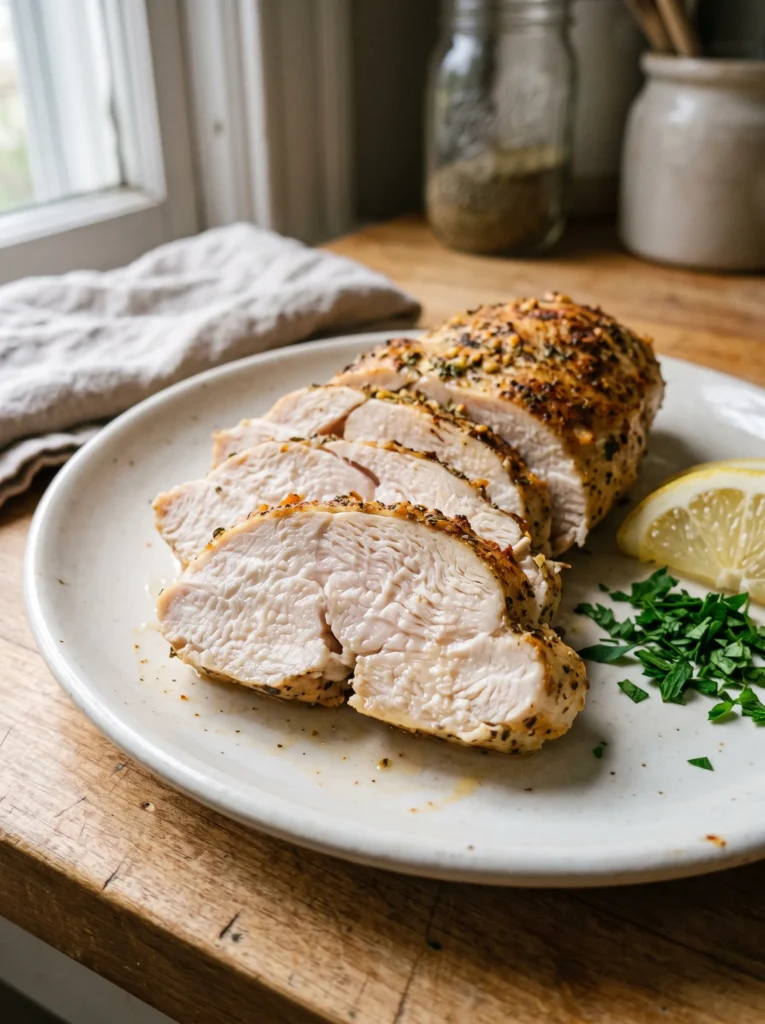
This foundational healthy chicken breast recipe uses a savory dry rub made from pantry spices, extra virgin olive oil, and fresh lemon to produce tender, golden cutlets in under 20 minutes of oven time.
Prep Time: 10 minutes
Cook Time: 18 minutes
Total Time: 28 minutes
Servings: 4
Cuisine: American
Ingredients
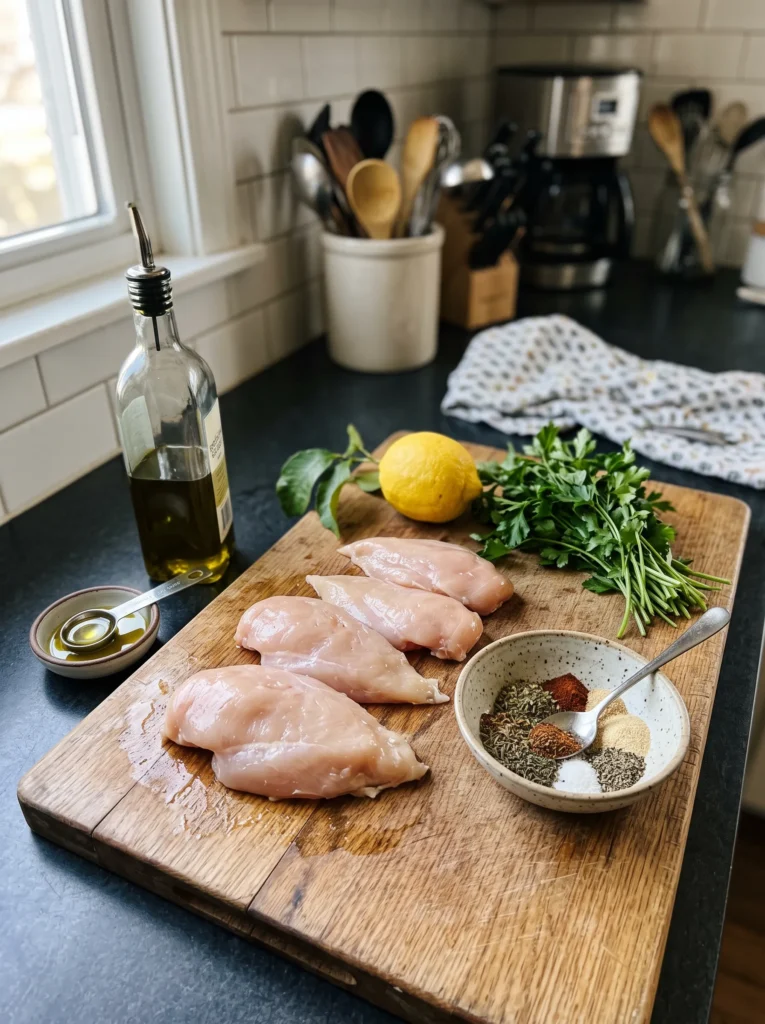
- 4 boneless, skinless chicken breasts (approx. 6 to 7 oz each)
- 1.5 tbsp extra virgin olive oil
- 1 tsp garlic powder
- 1 tsp onion powder
- 1 tsp smoked paprika
- 1/2 tsp dried oregano
- 1/2 tsp dried thyme
- 3/4 tsp kosher salt
- 1/4 tsp freshly ground black pepper
- 1 medium lemon, cut into wedges for serving
- 2 tbsp finely chopped fresh parsley (optional garnish)
Instructions
- Preheat and prepare the pan: Position an oven rack in the center position and preheat your oven to 425°F (218°C). Line a rimmed 18×13-inch baking sheet with parchment paper or foil lightly misted with olive oil spray.
- Even out the cutlets: Place the chicken breasts between sheets of plastic wrap. Using the flat side of a meat mallet, gently pound the thick end until each breast is an even 3/4-inch thickness throughout. Pat the surface dry with paper towels.
- Mix the seasoning rub: In a small bowl, stir together the garlic powder, onion powder, smoked paprika, dried oregano, dried thyme, kosher salt, and black pepper.
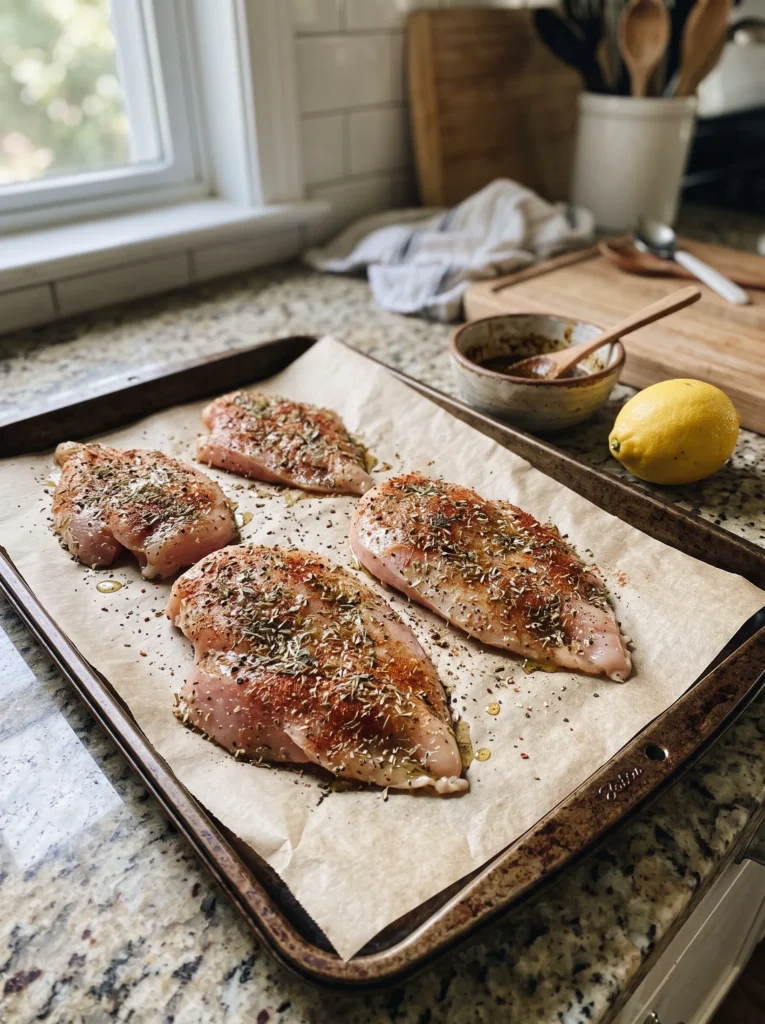
- Oil and season: Rub the extra virgin olive oil evenly over all sides of the chicken breasts. Sprinkle the spice mixture over the meat, pressing gently with your fingers so the rub adheres evenly.
- Bake to temperature: Arrange the chicken breasts on the prepared baking sheet with at least 1 inch of space between each piece. Bake for 16 to 18 minutes, until the internal temperature reaches 160°F (71°C) on an instant-read digital thermometer.
- Rest and carve: Transfer the chicken to a clean cutting board, tent loosely with aluminum foil, and let it rest for 5 minutes. Carryover heat will bring the final temperature to 165°F (74°C). Slice against the grain, squeeze fresh lemon wedges over the top, and garnish with chopped parsley.
Recipe Notes
- Temperature management: When testing any healthy chicken breast recipe, using an instant-read digital meat thermometer is the single most effective way to prevent dry meat. Avoid relying solely on clock time, as oven calibrations and breast sizes vary.
- Spice adjustments: You can easily swap the dried oregano and thyme for Italian seasoning blends, poultry seasoning, or ground cumin depending on what sides you are serving.
- Nutrition Note: Nutrition information is an estimate and will vary based on the specific ingredients and brands used.
Storage
Storing leftover portions from this healthy chicken breast recipe properly ensures the meat stays moist for weekday lunches. Let the cooked chicken cool to room temperature, slice or dice as needed, and store in an airtight glass container in the refrigerator for up to 4 days. Reheat gently in a covered skillet over medium-low heat with a tablespoon of water or low-sodium chicken broth to restore moisture.
6 More Flavorful Ways to Cook Chicken Breast
These six variations expand your options so you can choose the right healthy chicken breast recipe for any cooking method or flavor profile:
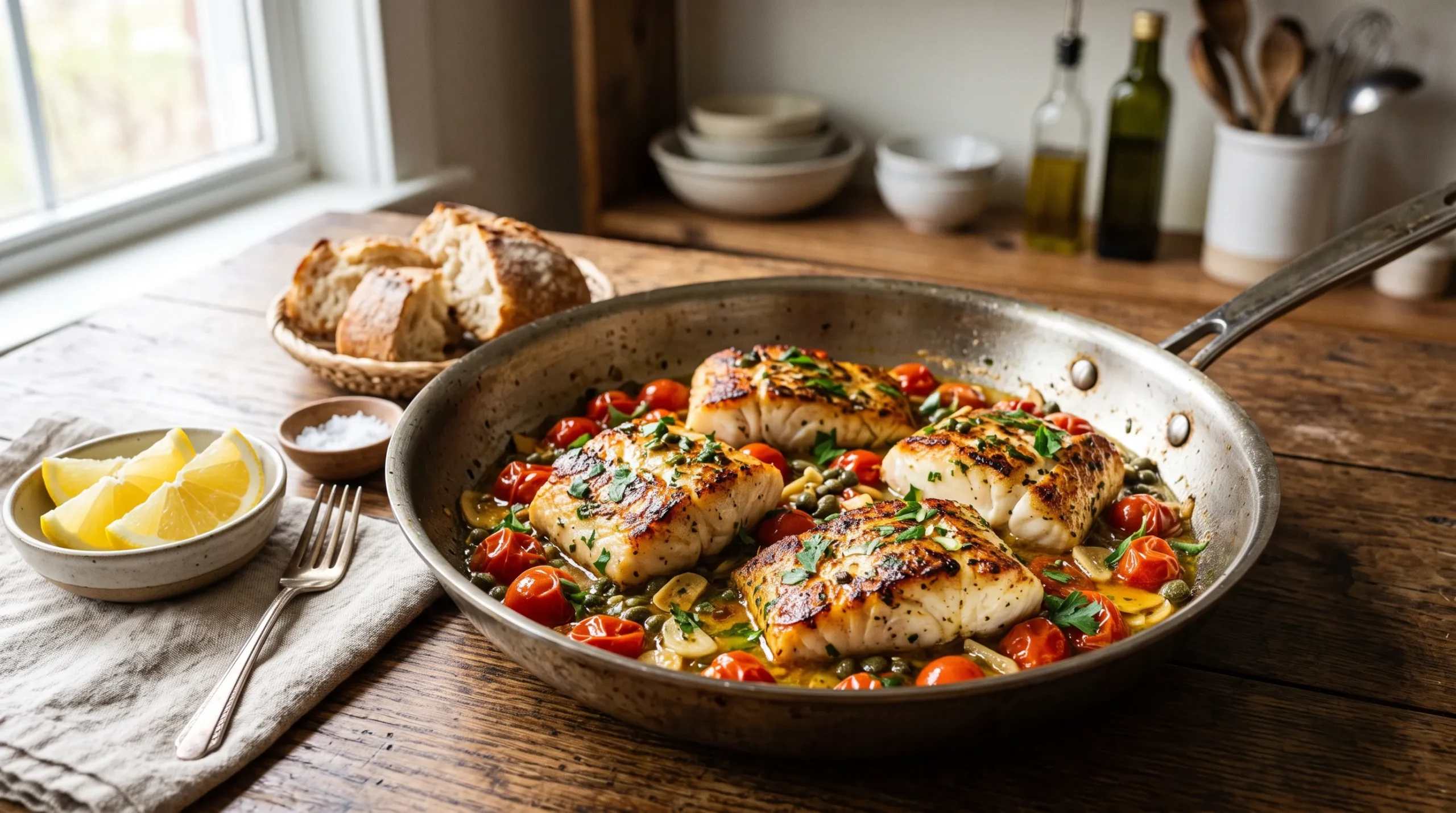
1. Skillet Lemon Piccata Cutlets
- The Concept: Thin chicken cutlets lightly seared in olive oil, then simmered in a pan sauce of fresh lemon juice, low-sodium chicken broth, garlic, and briny capers.
- Preparation Method: Halve chicken breasts horizontally into thin cutlets. Sear for 3 minutes per side in a stainless steel or cast-iron skillet, remove the meat, and deglaze the pan with broth, minced garlic, and 2 tablespoons of capers. Return the chicken to coat for 1 minute.
- Serving Idea: Serve over steamed whole-wheat angel hair pasta or alongside roasted asparagus.
2. Sheet Pan Mediterranean Greek Chicken
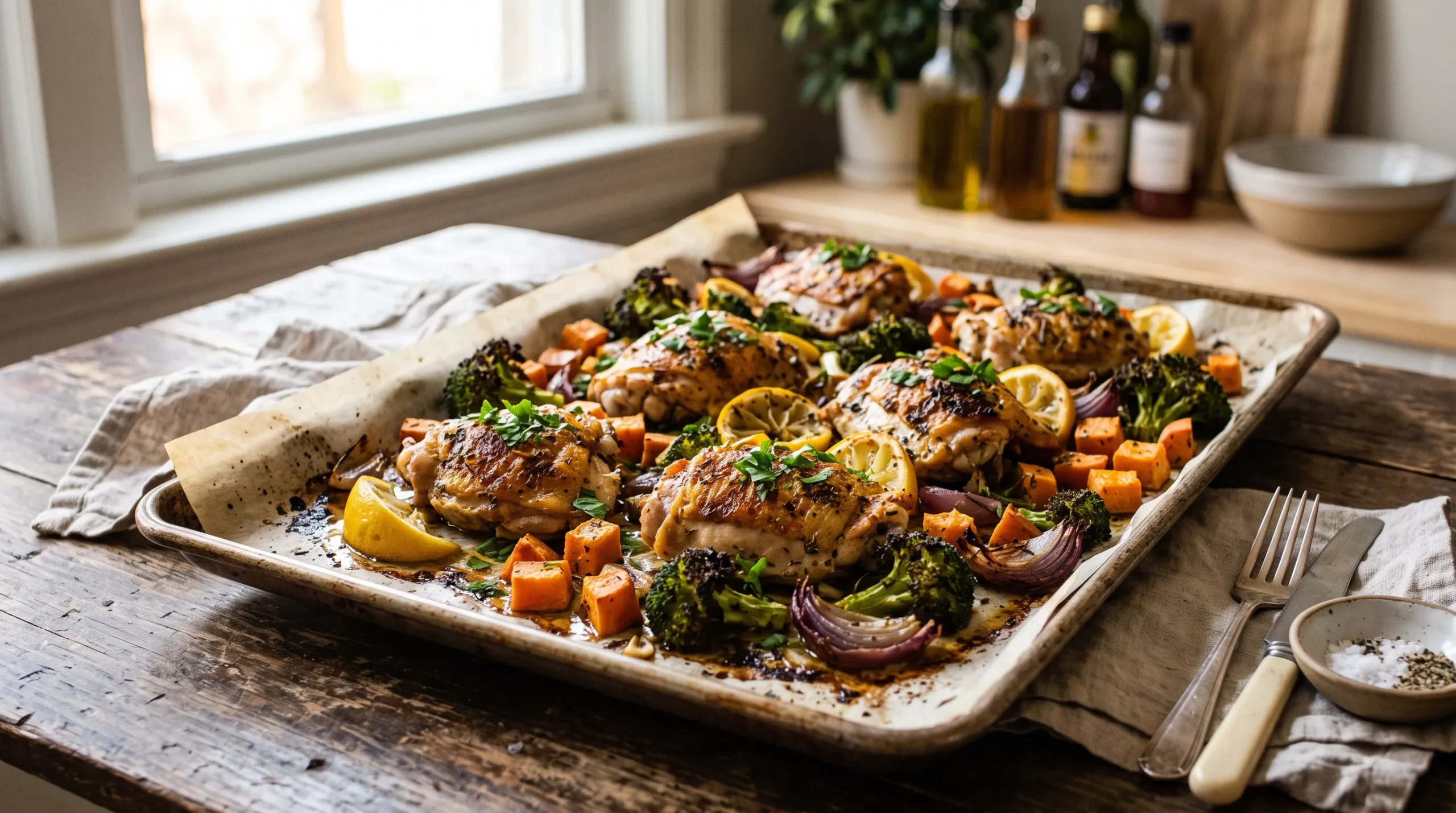
- The Concept: This sheet-pan variation serves as an all-in-one healthy chicken breast recipe complete with caramelized vegetables.
- Preparation Method: Toss cubed chicken breast, red bell pepper chunks, zucchini rounds, and red onion wedges with olive oil, lemon juice, dried oregano, and minced garlic. Spread across a baking sheet and roast at 400°F (204°C) for 20 minutes until the chicken reaches 165°F (74°C) and the vegetables are tender-crisp.
- Serving Idea: Top with crumbled sheep’s milk feta and chopped kalamata olives.
3. Crispy Spiced Air Fryer Chicken Breast
- The Concept: If you want crisp edges with minimal added fat, this air fryer method makes an exceptionally fast healthy chicken breast recipe.
- Preparation Method: Rub chicken breasts with 1 teaspoon of olive oil and a blend of chili powder, ground cumin, garlic powder, and sea salt. Cook in a preheated air fryer at 375°F (190°C) for 10 to 12 minutes, flipping halfway through, until an internal thermometer reads 160°F (71°C).
- Serving Idea: Slice over a crisp green salad or serve with black beans and brown rice.
4. Gentle Poached Ginger-Scallion Shredded Chicken
- The Concept: A gentle, moist-heat preparation that produces tender shredded meat for grain bowls, wraps, and soups.
- Preparation Method: Place whole chicken breasts in a saucepan with crushed fresh ginger slices, halved scallions, whole black peppercorns, and cold water or broth to cover by 1 inch. Bring to a gentle simmer, cover, remove from heat, and let stand undisturbed for 15 to 18 minutes until fully cooked.
- Serving Idea: Shred the meat with two forks and toss with a light sesame-ginger dressing.
5. Chimichurri Grilled Chicken Breast
- The Concept: Charred, smoky cutlets finished with a vibrant uncooked sauce of fresh flat-leaf parsley, oregano, garlic, red wine vinegar, and olive oil.
- Preparation Method: Butterfly chicken breasts to ensure rapid cooking. Grill over direct medium-high heat (400°F / 204°C) for 4 to 5 minutes per side until marked and fully cooked. Spoon fresh chimichurri over the warm chicken immediately after grilling.
- Serving Idea: Pair with grilled corn on the cob and a simple tomato-cucumber salad.
6. Balsamic Rosemary Skillet Glazed Chicken
- The Concept: A tangy reduction turns basic poultry into an elevated, restaurant-style healthy chicken breast recipe ready in under 20 minutes.
- Preparation Method: Sear seasoned chicken breasts in a hot skillet for 5 minutes per side. In the final 2 minutes, pour in 3 tablespoons of aged balsamic vinegar, 1 tablespoon of Dijon mustard, and 1 teaspoon of minced fresh rosemary, allowing the mixture to bubble and glaze the meat.
- Serving Idea: Serve over creamy polenta or alongside garlic-sautéed spinach.
Cooking Methods Comparison Guide
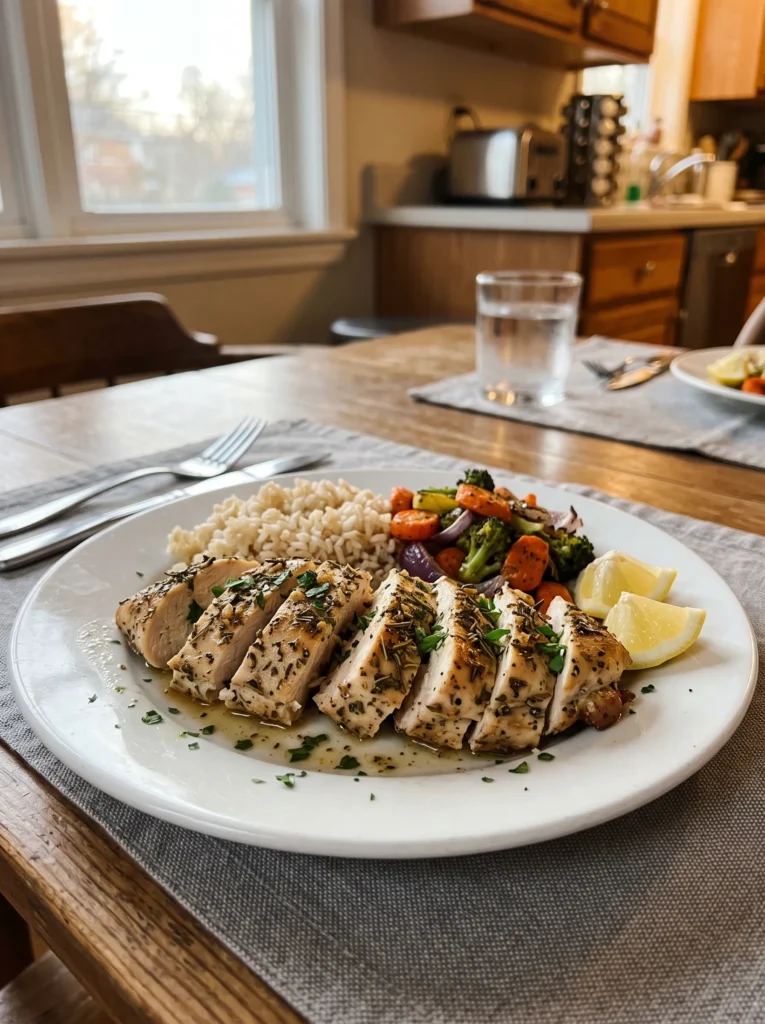
Selecting the appropriate cooking technique depends on your available time and desired texture:
| Cooking Method | Temperature | Average Cook Time | Best Texture Outcome |
| Baking (High Heat) | 425°F (218°C) | 16–18 minutes | Juicy interior with a light, flavorful spice crust |
| Skillet Searing | Medium-High Stovetop | 8–10 minutes total | Golden-brown sear with pan sauce potential |
| Air Frying | 375°F (190°C) | 10–12 minutes | Crisp exterior with minimal oil requirement |
| Gentle Poaching | Low Simmer / Residual | 15–18 minutes (steep) | Ultra-tender, easily shreddable meat for meal prep |
| Outdoor Grilling | 400°F (204°C) Direct | 8–10 minutes total | Distinct smoky char marks and firm bite |
Frequently Asked Questions About Cooking a Healthy Chicken Breast Recipe
How do you keep a healthy chicken breast recipe from drying out?
To ensure your healthy chicken breast recipe stays tender, pound the meat to an even thickness before cooking, season with salt in advance, and cook using high heat for shorter times. Most importantly, use an instant-read digital meat thermometer to pull the chicken from the heat as soon as it reaches 160°F (71°C), then allow it to rest for 5 minutes to complete carryover cooking.
What is the safest internal cooking temperature for chicken breast?
The USDA recommends cooking poultry to an internal temperature of 165°F (74°C). Because chicken continues to cook after being removed from the heat source due to carryover cooking, taking it off the stove, grill, or oven at 160°F (71°C) and letting it rest for 5 minutes reaches this target safely without drying out the meat fibers.
Can you cook frozen chicken breasts without thawing them first?
While baking frozen chicken directly is safe if cooked to an internal temperature of 165°F (74°C), the resulting texture is often rubbery and uneven because the exterior overcooks while the center thaws. For the best texture in any healthy chicken breast recipe, thaw chicken overnight in the refrigerator or submerge sealed packages in cold water for 30 to 45 minutes before seasoning.
Is it necessary to marinate chicken breasts before cooking?
Marinating is not strictly necessary, but an oil-and-acid marinade or simple dry brine enhances tenderness. If using an acidic marinade containing citrus juice or vinegar, keep the marinating time between 30 minutes and 2 hours. Leaving chicken in strong acid for longer than 4 hours breaks down the surface proteins excessively, resulting in a mealy texture.
Mastering a versatile healthy chicken breast recipe comes down to even heat distribution, simple aromatics, and monitoring the internal temperature rather than relying on guesswork. By pounding cutlets to uniform thickness and letting the meat rest after cooking, you can easily adapt these methods to fit any cuisine. For more balanced dinner concepts, explore our wide range of healthy recipes, or get in touch via our Contact Us page to share your favorite kitchen tips.