Adopting practical healthy cooking ideas in your daily kitchen routine does not require culinary school training or restrictive meal plans. Cooking better at home comes down to mastering fundamental kitchen techniques, understanding how heat interacts with ingredients, and learning how to build deep flavor using herbs, spices, and acidity.
When you understand the mechanics of moisture control, high-heat caramelization, and proper seasoning, everyday ingredients transform into vibrant, satisfying dishes. For more culinary guidance and meal planning tools, explore our complete recipe collection or dive into the practical healthy cooking ideas outlined below.
Table of Contents
- Building Flavor with Practical Healthy Cooking Ideas
- Featured Recipe: Sheet Pan Herb-Crusted Chicken and Vegetables
- 14 More Healthy Cooking Ideas to Transform Your Meals
- Culinary Technique Comparison
- Frequently Asked Questions About Healthy Cooking Ideas
Building Flavor with Practical Healthy Cooking Ideas
When exploring new healthy cooking ideas, the primary goal should always be maximizing flavor extraction rather than simply cutting out ingredients. Food that lacks flavor rarely leads to sustainable eating habits.
To elevate everyday meals without relying entirely on excess fats or sodium, focus on these core culinary pillars:
- Embrace the Maillard Reaction: High-temperature roasting and pan-searing cause amino acids and sugars on the surface of foods to brown, creating complex savory compounds that boiling or steaming simply cannot replicate.
- Layer Seasoning Sequentially: Salting food lightly at various stages of cooking draws out natural juices and seasons ingredients throughout, rather than dumping heavy salt onto a finished dish.
- Balance with Bright Acidity: A finishing splash of fresh citrus juice or aged vinegar cuts through richness and wakes up muted flavors with zero added sodium.
- Control Moisture Release: Overcrowding pans traps steam, resulting in mushy vegetables and gray, rubbery proteins. Giving ingredients ample space ensures crisp edges and tender interiors.
Featured Recipe: Sheet Pan Herb-Crusted Chicken and Vegetables
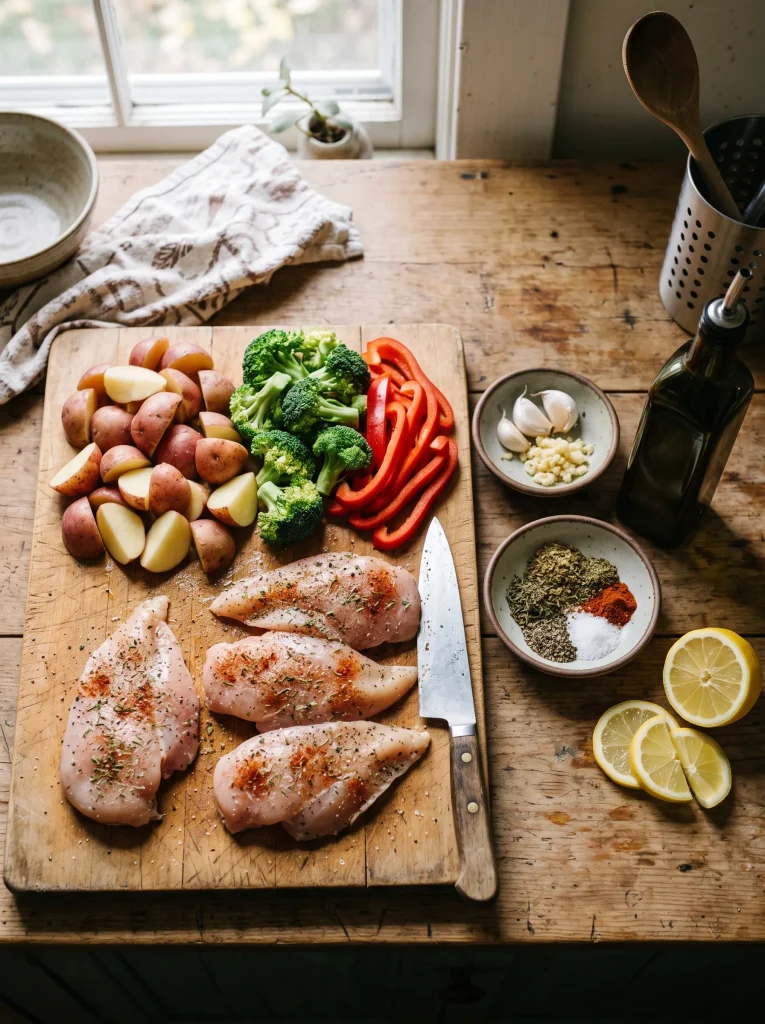
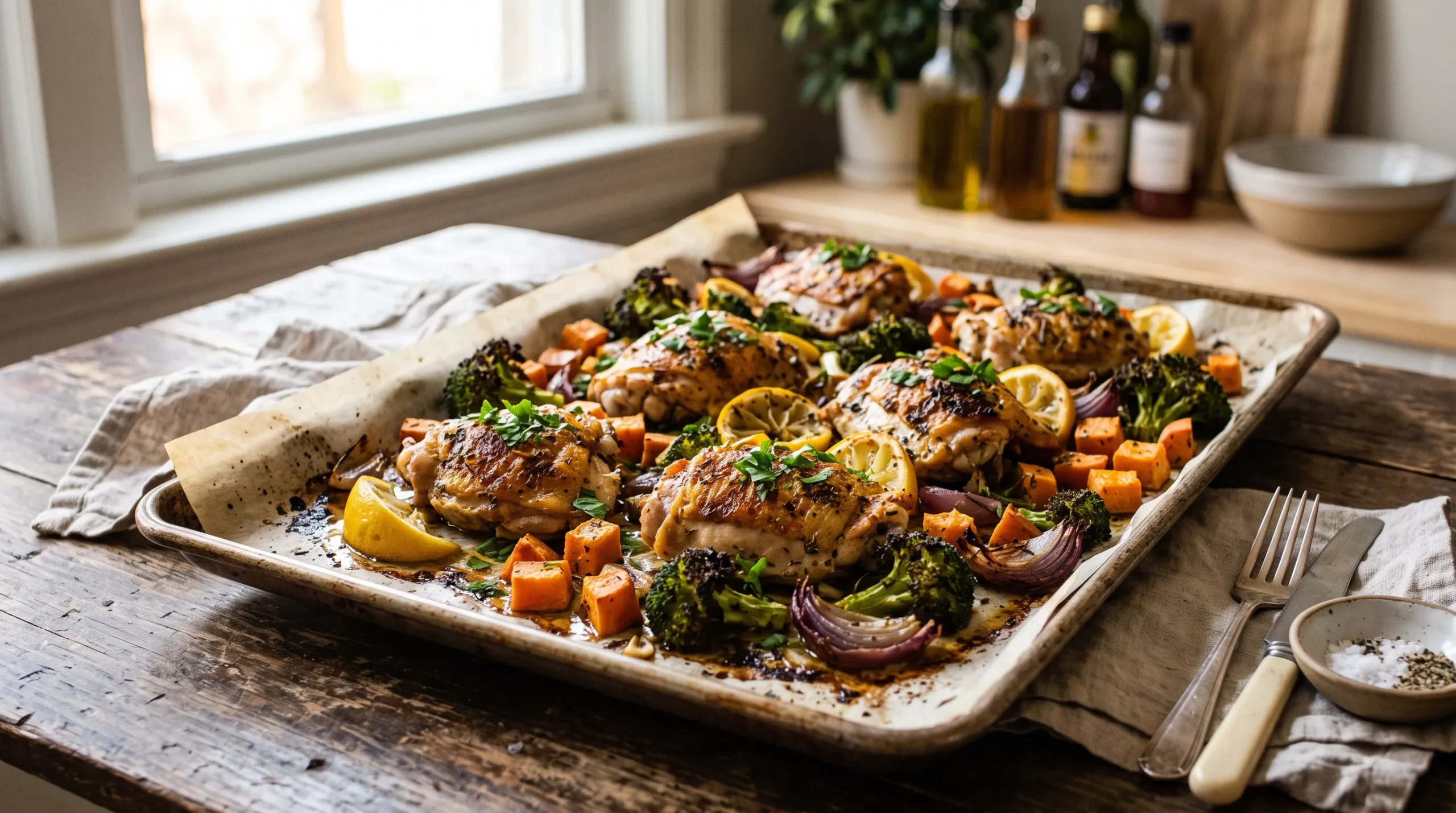
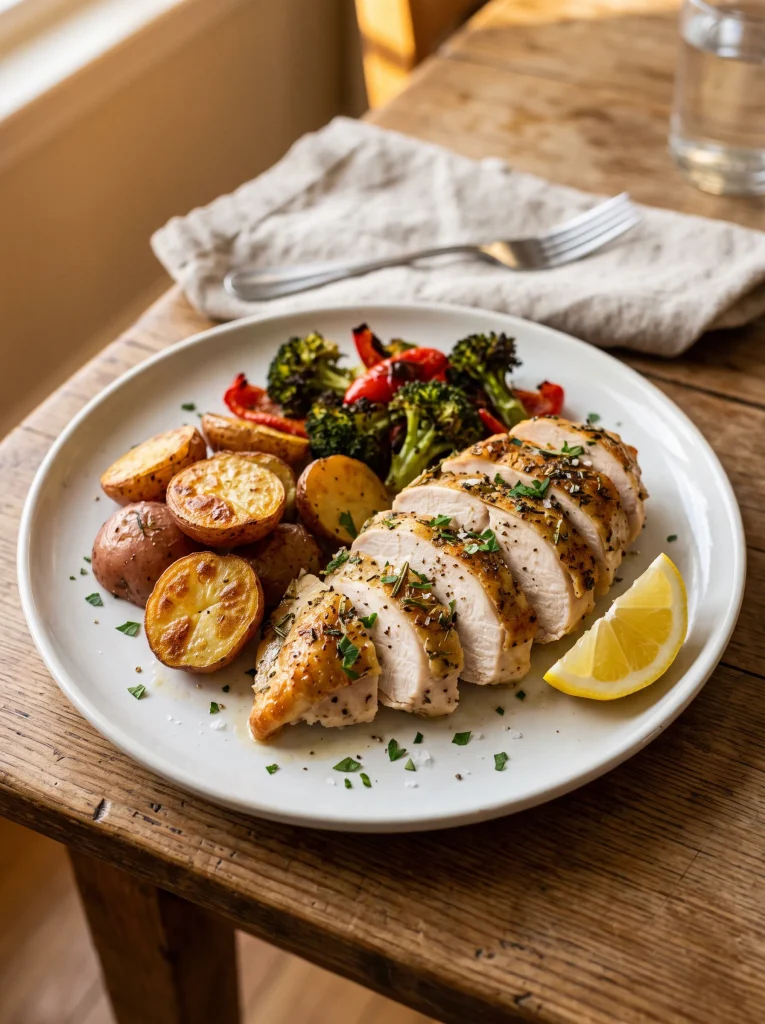
This balanced dinner serves as a blueprint for one of our top healthy cooking ideas: utilizing dry-herb marinades and high-temperature sheet pan roasting to caramelize vegetables while keeping lean poultry juicy.
Prep Time: 15 minutes
Cook Time: 25 minutes
Total Time: 40 minutes
Servings: 4
Cuisine: American / Mediterranean
Ingredients
- 1.5 lbs boneless, skinless chicken breasts, sliced horizontally into even cutlets
- 1 lb small red potatoes, quartered
- 1 large crown broccoli, cut into bite-sized florets
- 1 large red bell pepper, sliced into 1-inch strips
- 3 tbsp extra virgin olive oil, divided
- 3 cloves garlic, finely minced
- 1 tbsp dried Italian seasoning (oregano, basil, rosemary, thyme)
- 1 tsp smoked paprika
- 1 tsp kosher salt, divided
- 1/2 tsp freshly ground black pepper
- 1 medium lemon, cut into wedges for serving
Instructions
- Preheat the oven: Place an oven rack in the center position and preheat to 400°F (204°C). Line an 18×13-inch rimmed baking sheet with parchment paper.
- Season the chicken: Pat the chicken cutlets thoroughly dry with paper towels. In a shallow bowl, whisk 1.5 tablespoons of olive oil, minced garlic, Italian seasoning, smoked paprika, 1/2 teaspoon of salt, and 1/4 teaspoon of black pepper. Coat the chicken evenly in the herb oil and let it sit at room temperature while preparing the vegetables.
- Par-cook the potatoes: Toss the quartered potatoes with 1/2 tablespoon of olive oil and a pinch of salt. Spread them across one third of the baking sheet and roast for 10 minutes to ensure they cook through evenly.
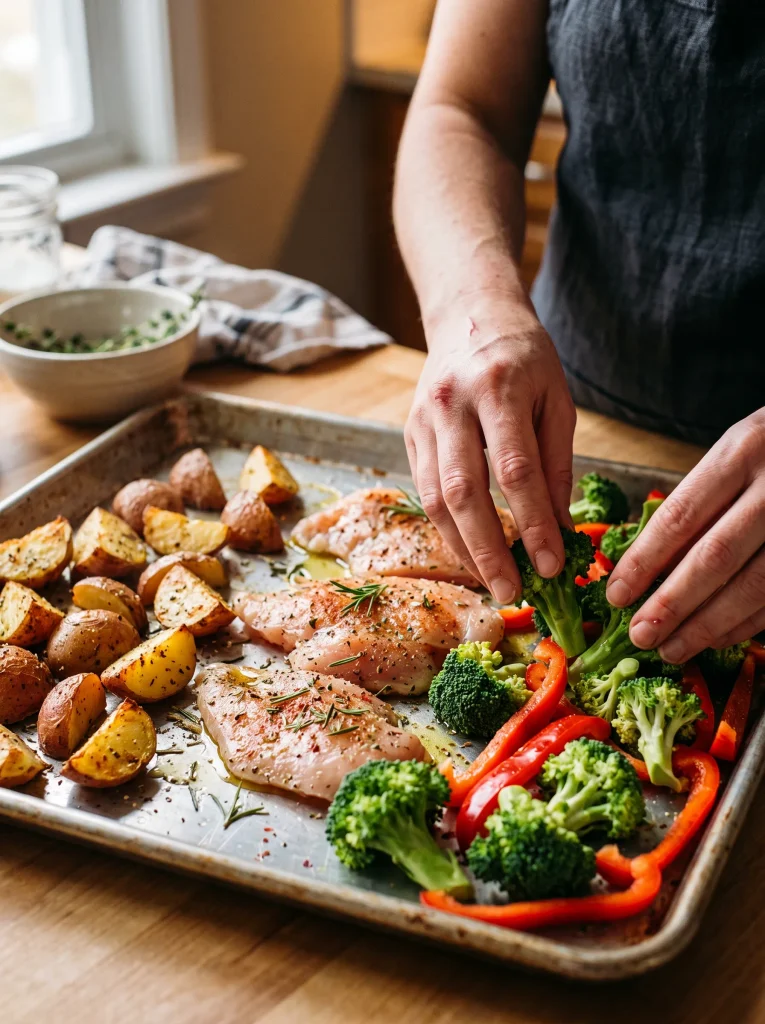
- Arrange the pan: Remove the hot sheet from the oven. Arrange the seasoned chicken cutlets in the center of the pan. Toss the broccoli florets and bell pepper strips with the remaining 1 tablespoon of olive oil, 1/2 teaspoon of salt, and remaining pepper, then spread them onto the open side of the baking sheet.
- Roast to doneness: Return the pan to the oven and roast for 14 to 16 minutes, until the chicken reaches an internal temperature of 165°F (74°C) on an instant-read meat thermometer and the broccoli edges are lightly charred and crisp.
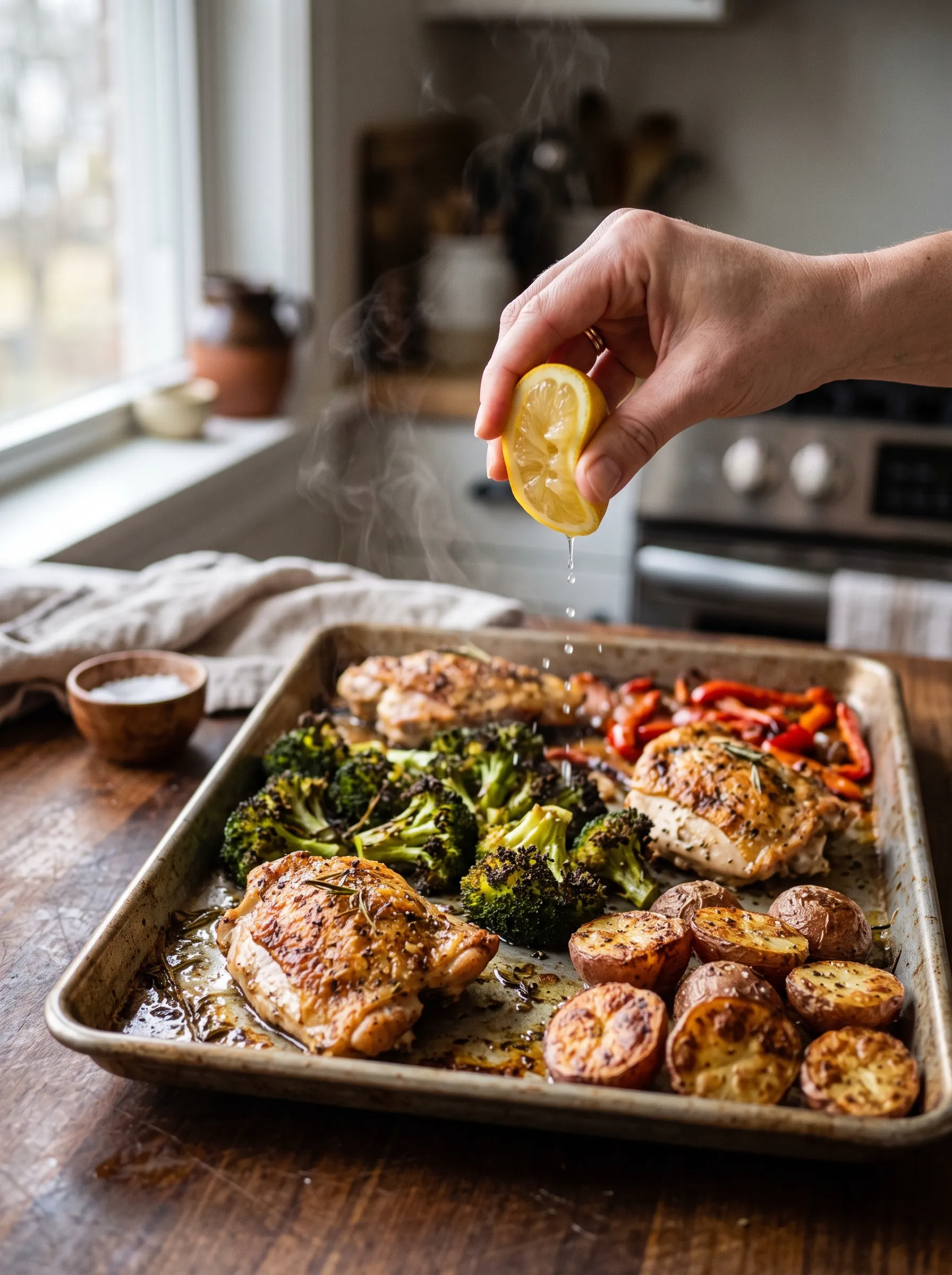
- Finish and rest: Let the chicken rest on the pan for 5 minutes before slicing. Squeeze fresh lemon juice over the vegetables and serve immediately.
Recipe Notes
- Uniform slicing: Slicing chicken breasts into cutlets ensures rapid, even cooking without drying out the exterior edges.
- Ingredient adaptation: Like many versatile healthy cooking ideas, you can easily substitute zucchini or asparagus for broccoli, or sweet potatoes for red potatoes, adjusting roasting times accordingly.
- Nutrition Note: Nutrition information is an estimate and will vary based on the specific ingredients and brands used.
Storage
Store leftovers in an airtight glass container in the refrigerator for up to 3 days. To reheat while keeping the chicken juicy, warm gently in a covered skillet over medium-low heat with a tablespoon of water or low-sodium broth for 4 minutes.
14 More Healthy Cooking Ideas to Transform Your Meals
Implementing these straightforward healthy cooking ideas will immediately elevate your weeknight cooking:
1. Deglaze Pan Drippings for Instant Pan Sauces
- The Technique: After searing chicken or pork in a skillet, remove the meat and pour 1/4 cup of low-sodium broth or dry white wine into the hot pan.
- Why It Works: Scraping up the browned bits (fond) dissolves intense caramelized flavor directly into the liquid. Simmer for 2 minutes with fresh herbs and a teaspoon of Dijon mustard for a rich sauce without heavy cream.
2. Bloom Dried Spices in Warm Fat
- The Technique: Heat ground cumin, coriander, curry powder, or paprika in 1 teaspoon of warm olive oil for 30 seconds before adding liquids.
- Why It Works: Fat-soluble flavor compounds trapped inside dried spices release rapidly in warm oil, dramatically increasing aroma and depth.
3. Finish with Acid Instead of Extra Salt
- The Technique: Squeeze fresh lemon juice or drizzle a teaspoon of sherry vinegar over soups, roasted vegetables, and stews just before plating.
- Why It Works: Acid brightens dull flavors and stimulates saliva production, making dishes taste seasoned and vibrant with less sodium. This technique is one of the most effective healthy cooking ideas for balancing rich dishes.
4. Blanch and Shock Vibrant Green Vegetables
- The Technique: Boil green beans, asparagus, or broccoli in salted water for 90 seconds, then immediately plunge them into an ice-water bath.
- Why It Works: This flash-cooking method sets chlorophyll, locking in bright green color and crisp-tender texture before a quick toss in garlic and olive oil.
5. Build Savory Umami with Fermented Pantry Staples
- The Technique: Whisk a teaspoon of white miso paste, low-sodium tamari, or tomato paste into vegetable broths, marinades, and grain bowls.
- Why It Works: Glutamate-rich ingredients provide deep, savory complexity that makes vegetable-forward dishes feel grounded and satisfying.
6. High-Heat Sear with Preheated Cast Iron
- The Technique: Preheat a heavy cast-iron skillet over medium-high heat for 4 to 5 minutes before adding lean cuts of beef, chicken, or firm tofu.
- Why It Works: Dense cast iron retains heat, creating a deeply browned crust in under 3 minutes per side without overcooking the delicate interior.
7. Puree Cooked White Beans for Creamy Soups
- The Technique: Blend 1 can of drained cannellini beans with 1 cup of vegetable broth, then stir the mixture into pureed soups or pasta sauces.
- Why It Works: Starchy legumes create a velvety, rich body and boost plant-based protein without requiring heavy cream or butter.
8. Master a 3-to-1 Everyday Vinaigrette
- The Technique: Whisk 3 tablespoons of extra virgin olive oil with 1 tablespoon of apple cider vinegar, 1/2 teaspoon of Dijon mustard, and a minced shallot.
- Why It Works: Mustard acts as a natural emulsifier, binding oil and vinegar into a smooth dressing that clings cleanly to salad greens.
9. Simmer Whole Grains in Aromatic Broths
- The Technique: Cook brown rice, farro, or quinoa in low-sodium chicken or vegetable broth steeped with fresh thyme sprigs and smashed garlic cloves.
- Why It Works: Grains absorb the seasoned liquid as they expand, creating incredible flavor throughout the kernel and making it one of the easiest healthy cooking ideas for meal prep.
10. Dry-Brine Poultry Before Roasting
- The Technique: Rub poultry with 1/2 teaspoon of kosher salt per pound and let it rest uncovered on a wire rack in the refrigerator for 2 to 12 hours.
- Why It Works: Salt dissolves into the meat, restructuring proteins to retain natural juices during cooking while air-drying the skin for maximum crispness.
11. Roast Whole Garlic Heads for Smooth Spreads
- The Technique: Slice the top off a whole garlic bulb, drizzle with 1/2 teaspoon of oil, wrap in foil, and bake at 400°F (204°C) for 40 minutes.
- Why It Works: Roasting mellows harsh allicin into sweet, buttery paste that can be folded into mashed cauliflower, grain bowls, and dressings.
12. Save Fresh Herb Stems for Simmering Pots
- The Technique: Tie parsley, cilantro, and basil stems with kitchen twine and drop them into marinara sauces, soups, and stocks.
- Why It Works: Herb stems contain dense essential oils that release steady aroma during long simmering without turning bitter.
13. Toast Raw Nuts and Seeds in a Dry Skillet
- The Technique: Warm raw walnuts, almonds, or pepitas in a dry skillet over medium heat for 3 to 5 minutes, shaking constantly.
- Why It Works: Heat mobilizes internal oils, turning soft raw nuts into intensely aromatic, crunchy salad toppers.
14. Quick-Pickle Red Onions for Instant Brightness
- The Technique: Submerge thinly sliced red onions in equal parts warm water and red wine vinegar with a pinch of salt for 15 minutes.
- Why It Works: Quick pickling tames raw sulfur bite while adding tangy crunch to tacos, grain bowls, and grilled meats.
Culinary Technique Comparison
Evaluating different healthy cooking ideas helps you choose the right approach for your weeknight routine:
| Cooking Method | Best Ingredients | Active Time | Primary Flavor Benefit | Key Culinary Tip |
|---|---|---|---|---|
| High-Heat Roasting | Root vegetables, cruciferous greens, poultry | 10 minutes | Deep caramelization and crispy edges | Leave at least 1/2 inch of space between pieces on the pan |
| Pan-Deglazing | Chicken cutlets, pork tenderloin, mushrooms | 5 minutes | Concentrated savory fond into a light sauce | Use cold broth in a hot pan and scrape with a wooden spoon |
| Bean Pureeing | Cannellini beans, chickpeas, vegetable soups | 5 minutes | Velvety, creamy texture without dairy | Blend until completely smooth before stirring into hot broth |
| Dry-Brining | Whole chicken, chicken breasts, pork chops | 2 minutes | Enhanced moisture retention and tenderness | Rest on a wire rack uncovered in the fridge before cooking |
Frequently Asked Questions About Healthy Cooking Ideas
What are the most budget-friendly healthy cooking ideas for beginners?
The most cost-effective healthy cooking ideas involve building meals around dry or canned legumes, whole seasonal root vegetables, and whole grains like brown rice and farro. Buying whole bone-in chickens and breaking them down at home, or reserving vegetable scraps for homemade stock, stretches your grocery budget while building superior baseline flavor.
How do simple healthy cooking ideas help reduce added sodium?
Applying foundational healthy cooking ideas—such as deglazing pans with unsalted broth, finishing dishes with freshly squeezed lemon juice, and blooming dried spices in warm oil—stimulates your taste receptors with acid and aroma. This allows you to cut back on added table salt without making your food taste flat.
What is the best way to prevent cooked vegetables from getting soggy?
Avoid crowding your baking sheets or sauté pans. When vegetables are packed tightly together, moisture evaporates and becomes trapped, steaming the food rather than roasting or searing it. Roast vegetables at 400°F (204°C) or higher on an open baking sheet to allow steam to escape freely.
Mastering practical healthy cooking ideas is about refining your technique, understanding heat, and treating basic ingredients with care. By leaning into proper browning, bright acids, and smart pantry staples, you can cook vibrant, flavorful meals every night of the week. To continue expanding your culinary skills, explore our full library of healthy recipes, or share your own favorite healthy cooking ideas with us through our Contact Us page.